Capital Markets & Governance

The Great Game: How Capital Markets Drove America's Transformation and Prosperity

Share this article
LINEFacebook

Book excerpts and Robin's commentary

Storage information

Bookmarks and reading positions are stored in this browser. Manage and back them up in My Reading.

Collected in Robin Shen’s Field Notes · Content type and attribution are shown above

English translation of the Chinese post originally published 2020-10-15. Translated 2026-10-25 with AI assistance. Historical figures and claims have not been updated or independently verified. 中文原文

Reading guide

Drawing on The Great Game, this note describes Wall Street as both a foundation for and a driver of America's transformation and prosperity. It financed the Civil War, supported westward development, helped build a nationwide railroad network, and fueled the first major expansion of heavy industry. During the two world wars it became a global financial center; afterward, it helped incubate at least two new economic transformations, in automobiles and the internet. Adam Smith's “invisible hand” is the thread: securities dealers pursued their own interests while also providing a reliable mechanism to supply industrialization with working capital. Robin's opening argument is that Taiwan must not casually weaken or marginalize its capital markets. The most open capital markets support the strongest environment for innovation and entrepreneurship.
Key points

  • Wall Street supported US war financing, westward development, and railroads, enabling a major expansion of heavy industry.
  • The two world wars made Wall Street a global financial center.
  • After the wars, it helped incubate new economic transformations in automobiles and the internet.
  • Robin's argument: Taiwan must not casually weaken or marginalize its capital markets.
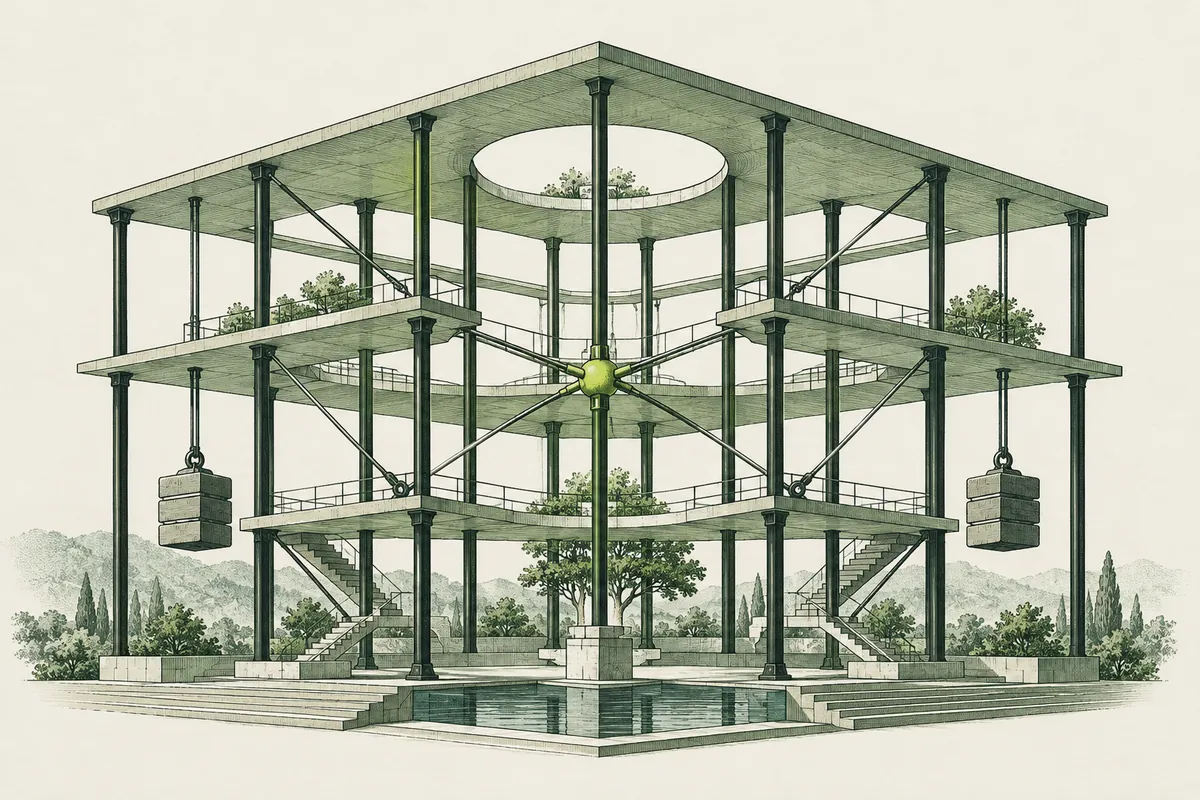
Columns and beams in an open building are connected by central rods and balanced weights, suggesting structure and checks in governance.
Capital markets & governanceThematic illustration · AI generated

Full text — English translation

#偉大的貪婪 — The Great Game #StrengthenCapitalMarkets #SupportInnovation #InvestInTaiwan Wall Street supported and drove America's transformation and prosperity. A well-developed, efficient capital market can become a force for many kinds of change. Capital can be extraordinarily efficient at creating value for the long-term future. #TaiwanMustNotCasuallyWeakenOrMarginalizeItsCapitalMarkets #InvestorsGreedAlsoHelpsCreateANewEra #AmericaHasTheMostOpenCapitalMarkets #AndTheStrongestEnvironmentForInnovationAndEntrepreneurship —————————— Wall Street has supported the entire history and growth of the US federal government. It financed the US government during the Civil War, supported the opening of the American West, helped build a railroad network spanning the country, and brought about the first major expansion of heavy industry in US history. During the two world wars that followed, Wall Street even became a global financial center, raising funds for both wars on a massive scale. This street, less than 1,000 meters long, also helped the United States incubate and transform at least two new economies after World War II, including automobiles and the internet. Wall Street helped America become the leading country in the global cycle of new economies. It could almost be called the most important force behind every new economy and new technology in US history. Adam Smith, the father of economics, described an “invisible hand” at work in the market. Wall Street securities dealers merely sought a stable, honest stock market that served their own interests. Yet in doing so, they also provided a reliable mechanism through which the industrialization of the American economy had ample funds to keep moving. The United States soon became the world's largest and strongest economy. This made Wall Street more prosperous, but the greater gain was the prosperity of America as a whole: Wall Street made the American Century possible.

These articles are personal notes, book excerpts, and collected reprints. Figures and events reflect the time of the original publication, are not current information, and do not constitute investment advice.

Share this article
LINEFacebook

DISCUSSION

Reader comments

What did this article make you think about? Different perspectives and constructive criticism are welcome.

Comments are public immediately. Do not include personal contact details or external links. Automated checks block suspicious solicitation, prohibited transactions and spam; they can make mistakes.

0 / 2000

Comments load when you reach this section.

    Administrator sign-in

    My reading notes

    These notes stay in this browser and are not published. Writing a note also saves the article. Back up or move your notes in My Reading.

    Manage my bookmarks and notes →

    STAY CURIOUS

    Save a good question for your next visit.

    Save this article, or follow the Facebook page and RSS feed for additions. Historical articles retain their original publication dates.

    Browse All articlesSearch articles and full text →